

Newsletter CISB n.8 | September 2012

TWO PERSPECTIVES
When developing a collaborative project with a company, how are the royalties shared?
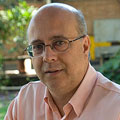 Vanderlei Salvador Bagnato
,
Coordinator of USP Innovation Agency "The partition of intellectual property is negotiated at the signing of the contract. Generally, the university enters with infrastructure and human resources, while the company is responsible for the investment. In those cases, the royalties are shared 50-50%, but different situations require different sharing agreements. Sometimes, the company hires human resources and infrastructure. In those cases, it ends responding for a larger share of the royalties. In conclusion, whoever pays more has more rights over them".
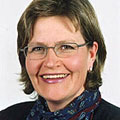 Margareta Norell
, Vice-president of KTH Royal Institute of Technology "There is no universal answer to that question - it always depends on what kind of cooperation we're planning to make and the policies of the company with whom we're working. What I can say is that we always try to articulate a win-win relationship, based on trust from both sides".
Top » |

SUITE
A conversation for innovation in Gothenburg, Linköping and Stockholm
In the first week of September, a group of Brazilian executives get in touch with another group of Swedish experts. A Brazilian committee of 25 professionals is heading to the Open Innovation Learning Week, a course about theory and practices of open innovation in Sweden.
For a week, the group will travel from Gothenburg, through Linköping, to Stockholm and attend exclusive lectures in three major Swedish universities: Linköping University, Chalmers Institute of Technology and KTH Royal Institute of Technology. The initiative was envisaged and coordinated by CISB, with support of professors of innovation management Susanne Ollila, Fredrik Tell and Mats Magnusson.
More than just a course, this will be a moment of connection. It's the first step for identifying common interests and capacities, which might generate partnerships and business. Professionals of different areas make the group - government representatives, researches, executives, lawyers, consultants, journalists and members of the Brazilian army.
On Sunday, 2nd of September, the committee arrives at Gothenburg airport. On Monday, they head to Lindholmen Science Park, where Chalmers University is located. There, they will have a lecture about open innovation and its relation with the concept of Arenas - neutral spaces where academics and executives can debate mutual interests and challenges. Afterwards, they will visit companies that apply that concept to their own strategies.
Next, in Linköping, a guided visit of defense giant Saab is in order, followed by lectures and even a ride at a flight simulator of the Grippen fighter jet. After lunch, they all head to the business incubator Mjardevi, where they'll talk with the company's aeronautical chief. In the end of the afternoon, the travellers will visit Linköping University campus and the National Museum of Air Force.
On Wednesday, on the way to Stockholm, capital of Sweden, participants will get to know Scania's R&D center, while the afternoon will be open for business meetings previously arranged by CISB.
At night, participants will be able to re-enact a famous chapter of the history of Brazil and Sweden: the finals of the 1958 World Cup, when Pelé scored one his most famous goals and Brazil became world champion for the first time. This time, Swedish participants will be challenged to play another football match against members of the Brazilian committee.
On Thursday, besides visits to the labs of KTH Royal Institute of Technology, participants will attend a debate about Sweden's challenge-oriented innovation strategies, where Vinnova representatives and John Gorecki, member of Globe Forum, will be present. On the same day, CISB's executive director Bruno Rondani will present SNITTS - Swedish Network for Innovation and Technology Transfer. On the last day, after receiving a certificate of participation at OILW, the committee will join CISB for a guided visit at the Swedish Institute. For those who still have the energy, customized business meetings can be arranged afterwards.
See complete program.
Top » |
ARTICLE
Swedish-Brazilian partnership for innovation
Leda Lúcia Martins Camargo, Brazilian ambassador in Sweden
Magnus Robach, Swedish ambassador in Brazil
The 1958 World Cup was an historical landmark for most Swedes. The Swedish football team reached the tourney's finals - but it lost, after Brazil beat it with 5 to 2 and started its famous journey as the most successful national football team in history. There is even a documentary about that: "1958, the year the world has met Brazil", from José Carlos Asbeg.
Those memories created deep ties between our countries. And now both teams have met again in Stockholm, in the same Stadium, Råsunda, for a farewell match before its demolition to make place for a new arena. Edson Arantes do Nascimento, best known as Pelé, has participated of the ceremony, which also featured other 13 players from both teams of 1958.
This is also a moment to reflect about what those two countries, so distant and so different, could do together. And, for that, an important business seminar will be held in Sweden with the participation of heavy weights of industrial and commercial sectors of both countries. It'll also count with the presence of Brazil's vice-president, Michel Temer, and Her Majesty the Queen Sylvia of Sweden.
Despite having participated in the construction of the Corcovado and the Sugar Loaf's cable cars systems, it was only around 1958 that the Swedish industry started to properly establish itself in Brazil, up to the point that, today, São Paulo is considered the largest "Swedish industrial park" in number of employees. Electrolux, Scania, Volvo, Sandvik, Alfa Laval, SAAB Technologies and so many other renowned companies are now in Brazilian soil.
The economic stability and social progress Brazil has been showing, together with the optimism atmosphere so evident in the country, are crucial assets in this current global setting of so many uncertainties. Brazil has been making an effort to diversify its economy and promote growth based on technology. Important areas, like aerospace and innovative agriculture, are already noteworthy.
The Swedes count on their tradition of creativity in industry and science to stay competitive, and the key for their success is the constant effort to innovate. That demands investment and, most importantly, a respectful relationship with the scientific community, the public institutions and the businesspeople. Research is oriented by demand. There is a system consistently sending good ideas to the industry. The education system is definitely oriented to the development of independent minds. Sweden has been highly praised in those criteria: for the second consecutive year, it was elected by the International Organization of Intellectual Property, an UN agency, the second most innovative country in the world.
Brazil seeks high technology transfer, but it also needs to consider how its global politics could underline its native innovative capacity. Swedes need to work on making themselves more present in emerging markets and, for that, they mean to build global networks for open innovation, with no hidden agendas.
The possibility of building a partnership for innovation between Brazil and Sweden is, therefore, evident. Actually, it already exists, but it must be pursued more vigorously. With that in mind, both countries should:
- Intensify dialogue about creating the best possible atmosphere for innovation;
- Focus on collaborative projects for innovation in the fields of environmental technology, like, for example, transportation, renewable energy and sustainable reforestation.
- Develop more mutual platforms to facilitate execution of collaborative actions, like the Swedish-Brazilian Research and Innovation Centre.
- Encourage science parks in both countries.
- Maximize the use of opportunities offered by the Science Without Borders and other similar Swedish programs, which were developed to strengthen the ties between research institutions and build skill for future industrial initiatives.
That game in Råsunda is a symbol of this friendship. A partnership for innovation could lead our economies and relations to a new soundly established dimension, since its based on the mutual advantages both countries offer one another.
Article published on Valor Econômico. Top » |

BRAZILIAN NEWS
CISB creates hub in Minas Gerais to involve strategic partners
Besides the activities at the São Bernardo do Campo office, CISB has now another stepping stone in Brazil. A second hub was created in the Minas Gerais estate, which will help the organization to connect with a region bristling with potential for cooperation and innovation. Manager Paulo Adriano Borges has the challenge of prospecting demands and opportunities and building networks between universities, research centers and companies, in order to find creative solutions using multiple excellences wherever they are.
Sweden's interest in Minas Gerais, according to Paulo Borges, is very clear: the state has the 3rd largest economy of Brazil, is one of the biggest players in the technology field and has renowned universities - like UFMG, UFV and UFLA -doing prominent work in the fields of biotechnology, information sciences and nanotechnology. If Sweden sees Brazil as an important partner, Minas is certainly one of the priorities.
Once innovation doesn't happen in closed labs inside universities anymore, it's up for Paulo to make the necessary connections. As an example, he mentions the case of a partnership with Minas Gerais Energy Company (Cemig). "One of world's main challenges today is the energy supply. And one way to avoid a future energy crisis is to make consumers produce energy too. Based on that, Cemig has launched last year a call for ideas that could tackle that issue. CISB has accepted it and proposed some skilled people to think about this problem". The solution was found by UFMG, in Belo Horizonte, and the KTH Royal Institute of Technology, in Sweden. A proposal was made and approved by CEMIG - now, the project is ready to be developed.
Paulo says projects from Agricultural sciences depend on computers, geology and nanotechnology, just to mention one example. The need for cooperation and and multiple skills is a reality, but relationships, especially in the case of Brazil and Sweden, must be of the win-win kind.
Top » |
SWEDISH NEWS
Sweden signs agreement to offer scholarships to Brazilians
The Swedish government signed, in the end of August, a letter of intentions to offer 1800 scholarships for Brazilian students, both undergraduate and postgraduate, subject to the Science Without Borders program. The vacancies will be offered in 27 different universities and the number of scholarships might vary - it might end up being even higher than 1800.
According to Josefin Peterson, representative of the International Program Office for Education and Training (IPO), a Swedish government agency that promotes academic exchange and international cooperation, those scholarships are equally important for both Brazil and Sweden. She sees the Science Without Borders as a "positive initiative for the development of high quality education" and believes cooperating with the Brazilian government in that sense will allow a continuous process of internationalization of Swedish universities, which is key for the innovation they seek. At the same time, it'll strengthen the ties between the two countries.
Josefin adds that "quality education and excellence in research are crucial for growth and sustainability of a society". For her, international cooperation and student mobility are important steps to reach that high level education. "We contacted main Swedish institutions in Sweden and they seem very interested in the program".
According to Josefin, after the final adjustments are concluded, the topic will probably be featured in local newspapers. In Brazil, the agreement is becoming increasingly notorious for its freshness and impact.
Top » |
PARTNER NEWS
CISB expands activities and network
2012 is yet to end, but CISB already sums advances and improvements. This was shown in the balance sheet made by the Center's executive board, according to which, partnerships are at full stretch, on the way to a stronger cooperation between Brazil and Sweden.
This year's goals have been pursued relentlessly – among them, to increase the number of exchange of experts and students between the two countries and bilateral connections for innovation. The numbers speak for themselves: there are currently 47 project opportunities and 11 of which are already ongoing; other two are just waiting for disbursement. That is an increase of 17 projects in relation to 2011. There are now 79 collaboration agreements, a significant increase compared to last year's 40. Besides, the center has welcomed three new members, now with a total of 11.
Partnerships were agreed with Chalmers University, University of Skövde, Linköping University and Royal Institute of Technology, all of which Swedish institutions. Meanwhile, in Brazil, Unicamp, ITA, PUC-RJ, PUC-RS, FEI, USP and UFABC are also developing projects together with CISB. There are 32 proposals in discussion, 27 submitted to CNPq, nine pre-approved and other nine in process.
The press has had a keen eye for all that work. This year, there were 77 media insertions in specialized publications, local newspapers and also in national media in both countries. CISB's monthly newsletter already accounts for 2,500 readers – more than twice the amount of last year.
The next steps are the study and creation of new hubs in important Brazilian capitals and projects in several sectors, like sustainable energy, transportation and logistics.
Top » |
SAVE THE DATE
12-14 November
Second Annual Meeting of CISB within the Open Innovation Seminar
Top » |
 |